
Harvest reports are coming in
Ilse van Dijk, winemaker at Deetlefs Estate, is poetic when describing the intensity of the 2010 harvest: “It feels like walking into a perfume factory, with hallucinations of palm beaches and pineapple cocktails every morning when opening the cellar doors for yet another creative day. ”
Van Dijk says the Sauvignon Blanc is looking good, with exotic tropical fruits and good structure. While the Pinotage, which is still fermenting, already has a deep intense colour and fresh berry flavours.
Willie Burger, cellarmaster at Badsberg Cellar says: “The harvest is smaller this year, but the quality definitely makes up for it. Pinotage is the only red cultivar harvested so far, and the wines made from this variety look very promising. “What really stand out are the soft tannins and the deep, red colour. Overall 2010 promises an exciting vintage, although a bit smaller.”
Gerrit van Zyl of Botha Cellar says the harvest is smaller than expected – about 10% to 15% less than 2009. Cultivars already harvested are Chenin Blanc, Sauvignon Blanc, Chardonnay and Semillon, while they have started with Pinotage. The Pinotage at Botha also has good colour and the wine is fruity but with tannins that are both ripe and soft in the mouth
At KWV they say 'so far we received Pinotage, Merlot and Shiraz grapes. We are almost finished with the Pinotage and we’ll start on the Merlot shortly. The grapes are definitely coming in later than in 2009 because of the cool weather and today’s weather has made things challenging…. However, the quality of the Pinotage that has come in is amazing and from the Merlot grapes that we have seen, KWV Wines is expecting a good vintage from this year’s crop too.'
Corlea Fourie, winemaker at Bosman Family Vineyard harvested their Pinotage grapes early February. By mid-month she was blogging "Beautiful purple/crimson juice-maybe the most rewarding cultivar to work with purely because of the instant gratification of oodles of colour. Loving it!"
But Delheim is reporting "only the Pinotage has not fared as well as hoped."
Showing posts with label KWV. Show all posts
Showing posts with label KWV. Show all posts
06 March 2010

12 July 2009
Easy drinking Golden Kaan Pinotage 2006

Golden Kaan is a brand that has not yet reached the UK so I was pleased to be able to taste this bottle given to me at the London Wine fair. The question I forgot to ask is what ‘Kaan’ means. Google says it is Hindi for ‘ear’ and I suppose the map of Africa looks a little like an ear, but why a wine intended for the German market should use a Hindi name is beyond me.
Golden Kaan was set up five years ago as a partnership between the German Racke company and Paarl based wine giant KWV. The range, with its distinctive label design, was immediately successful in its target market and then expanded into the USA where it soon became a top seller in California -- as reported here.
This wine comes from the excellent 2006 vintage and was a hit with my dining partner who loved it for being ‘smooth and fruity with subdued tannins’. I found it a clean fresh modern style wine quite light bodied and fruit forward which slipped down very easily, though it didn't show overly much Pinotage characteristics.
Golden Kaan was set up five years ago as a partnership between the German Racke company and Paarl based wine giant KWV. The range, with its distinctive label design, was immediately successful in its target market and then expanded into the USA where it soon became a top seller in California -- as reported here.
This wine comes from the excellent 2006 vintage and was a hit with my dining partner who loved it for being ‘smooth and fruity with subdued tannins’. I found it a clean fresh modern style wine quite light bodied and fruit forward which slipped down very easily, though it didn't show overly much Pinotage characteristics.
Sealed with a plastic closure, presumably because of lack of US market acceptance of screwcaps.
.
17 October 2008
We Can't Meet Demand for Café Culture -- says KWV
 Café Culture, launched just one year ago in September 2007, has proved to be a runaway success.
Demand for the wine is so great, especially in the Far East, that KWV CEO Thys Loubser told South Africa's Business Report that "we cannot get enough".
Therefore he has ordered that production of the mocha 'n' chocolate accented Pinotage be increased to exceed one million litres.
26 May 2008
Café Culture wins at Vinnordic
Congratulations to Café Culture – KWV’s coffee accented Pinotage –which has won the award for Best Red Wine in its price category at the Vinnordic Wine Challenge.
15 May 2008
Pinotage is Golden in California
 Pinotage is the favourite South Africa wine with California consumers.
Nielsen figures show that Golden Kaan’s Pinotage is the top selling South Africa wine in Northern California grocery outlets*.
“When we first came into this market, people told us that selling South African wine would be near impossible, that Californians are too loyal to California wine,” says Erik Ran, Senior Vice President, Sales & Marketing. “After watching our sales numbers grow each month and seeing the Nielsen data with my own eyes, I’m proud to say we’ve proved those naysayers wrong.”
Golden Kaan was formed in 2003 and is a joint venture between Racke International, who market and sell the wine internationally, and South Africa’s KWV International, who produce the wine in Paarl.
Other Golden Kaan wines include Pinotage Rosé, Chenin Blanc, Sauvignon Blanc, Shiraz, Cabernet Sauvignon, Merlot and Chardonnay, all retailing around $10.
*Source: ACNielsen, Northern California Food, 26 weeks ending 12 Jan 08
.
31 March 2008
Bertus Fourie leaves KWV for VdV
 |
| Bertus Fourie |
Bertus's younger brother, Martin Fourie, is winemaker at Val de Vie and the two are looking forward to working together.
Val de Vie is a lifestyle residential estate with a strong focus on wine and polo. Most of the existing vineyards have been replanted with Rhone varieties as these are considered best suited to the area. The cellar building dates from 1825 and houses a 100-ton cellar solely for the Rhone varieties. But plans for a bigger Pinotage-only cellar facility are underway.
Martin Venter, developer of Val de Vie Lifestyle Estate, said "We view the appointment of Bertus Fourie as managing director of Val de Vie Wines (Pty) Ltd as an important part of the implementation of our marketing and branding strategy for Val de Vie Wines that coincides with the lifestyle brand of Val de Vie Lifestyle Estate. Interestingly, it was the Coffee-style Pinotage that originally sparked our friendship. It is the friendliest wine that I have ever enjoyed, and all my friends and colleagues love it as well. Like Bertus said at several occasions: 'Selling wine is all about relationships', and what a better way to start any relationship than with this wine."
So will there be a Val de Vie mocha Pinotage? Wait and see......
The Pinotage Club met Bertus Fourie last month, click here for the report.
16 February 2008
Making an Ultra-Premium Priced Boutique Pinotage
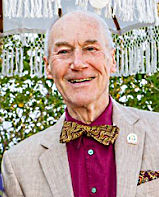
There is a new boutique winery in Paarl specialising in very low volume Pinotage. The winery is fitted out with the latest equipment, including small stainless steel fermenting tanks and a vibrating sorting belt. The location of this winery may surprise because it is owned by KWV and situated in their Paarl complex. But it operates a separate experimental research winery and it is the domain of Bertus Fourie. (pictured right)
Bertus has an affinity with Pinotage and is probably best known for the popular ‘coffee and chocolate’ interpretation that he pioneered when working at Diemersfontein, and KWV’s award winning ‘Café Culture’ mocha Pinotage released in September 2007.
I was lucky enough to be present when the 2008 Pinotage harvest was being processed by Bertus assisted by Anneka Du Plessis. After picking, the grape bunches had been transported to the winery where they’d been placed in a reefer (a refrigerated steel container seen on trucks and container ships) outside the winery door. They’d been cooled down to 10˚C which firmed up the grape berries. Then a conveyer belt lifted the whole bunches to a vibrating sorting bench where an operator removed any bunches with rotten or unripe grapes. At the end of the belt the bunches drop into a destemmer. Stems are ejected into a waste bin and the individual berries roll out onto another sorting bench. Here a team or workers picked out any remaining stalks (pictured below). “It makes a hell of a difference in avoiding unripe flavours”, Bertus told me. “From three tons of grapes the sorting team will take out maybe 15Kg of green stalks.”
 Bertus has an affinity with Pinotage and is probably best known for the popular ‘coffee and chocolate’ interpretation that he pioneered when working at Diemersfontein, and KWV’s award winning ‘Café Culture’ mocha Pinotage released in September 2007.
I was lucky enough to be present when the 2008 Pinotage harvest was being processed by Bertus assisted by Anneka Du Plessis. After picking, the grape bunches had been transported to the winery where they’d been placed in a reefer (a refrigerated steel container seen on trucks and container ships) outside the winery door. They’d been cooled down to 10˚C which firmed up the grape berries. Then a conveyer belt lifted the whole bunches to a vibrating sorting bench where an operator removed any bunches with rotten or unripe grapes. At the end of the belt the bunches drop into a destemmer. Stems are ejected into a waste bin and the individual berries roll out onto another sorting bench. Here a team or workers picked out any remaining stalks (pictured below). “It makes a hell of a difference in avoiding unripe flavours”, Bertus told me. “From three tons of grapes the sorting team will take out maybe 15Kg of green stalks.”

Another conveyor belt lifts the hand selected berries up above a fermenting tank where they slide down a chute and between a pair of rollers placed over the tank hatch (pictured below). . “We leave it the last possible moment,” said Bertus. “We can adjust the rollers so can decide whether we want the entire berries to go through, or by how much they should be crushed.”
“This was a tricky year for Pinotage,” says Bertus. “It was quite a cool spring and early summer and sugars and phenolics were developing evenly, then the temperature just shot up which caused sugars to increase much faster than the phenolics. But these grapes are nice. They’re very small, giving a high extract: 27 sugar, 3.6pH and 6 acid. Magic!”
Bertus is using natural yeast fermentation, “Among other advantages, it seems to finish with an alcohol level about one degree lower than if we’d used a cultivated yeast. So we’re getting a complex Pinotage, but at 13.5% alcohol.”
It has been decided that the best barrels produced by this experimental boutique winery will be bottled separately and made available to the public under a new Mentor’s Selection label. The first vintage will be the 2006 Pinotage, and although the price has not been finalised, it will be at what KWV call ‘the top end of the ultra-premium prince point’ , in other words it is likely to cost much more than most other South African wines.
I tasted samples from two barrels of the 2007 vintage. These are works in progress and a long way from being ready, but the first was very exciting: smooth, lots of complex layers, good balance of subtle wooding and acids. “I want to emphasise the Pinot Noir characteristics,” says Bertus. I’m using 228 litre Latour Burgundy barrels. The second sample had brighter fruit and more forward acids, but didn’t seem as together as the first.
Then I tasted the 2006 Pinotage, which is now in bottle. This had spent 18 months in oak. It had good fruit, but the acids seemed a bit aggressive and wood tannins were strong on the finish. “We are not making a wine that should be drunk on release,” Bertus told me. “People who buy this will need to understand that it is a wine that needs to be cellared for a few years, at least, before it is ready to drink.” By now the bottle had been opened a short while, so I poured another measure and also gave a vigorous swirl to aerate it. On second taste it was less aggressive and, now with the explanation that it was a wine for the long haul, not immediate gratification, I could see the underlying potential. The wine is currently undergoing bottle maturation and is likely be released after another six months ageing.
I was impressed by KWV’s commitment to taking Pinotage to the highest levels, by hiring Pinotage expert Bertus Fourie and using labour intensive small scale winemaking. Was I seeing the birth of South Africa’s equivalent to Australia’s iconic Penfolds’ ‘Grange’?
Only time will tell, but an ultra-premium priced Pinotage can only enhance the overall status of the variety.
10 September 2007
Café Culture Coffee Pinotage Launched
KWV today launched a new Pinotage under the brand Café Culture – and the name suggests they are aiming at the market for coffee-toned Pinotages pioneered by Diemersfontein with its cult ‘coffee & chocolate’ Pinotage. Not that KWV is using the ‘c’ word – oh dear me no – please note that it is ‘mocha’.KWV say “Café Culture is a new Pinotage wine, produced in an innovative style and presented in a trendy packaging that mirrors its vibrant target market perfectly. Café Culture is a brand that has been specially created for trendy, upmarket enjoyment. It has an air of the avant-garde and bohemian. It is associated with debate and banter. It is the Café Culture - a lively, vibey social spirit with a sense of adventure and exclusivity...even decadence. The modern, understated label emphasises the social nature of the wine, and recalls the smart café society of the Twenties and Thirties.”
The wine was crafted by winemaker Bertus Fourie who says the wine “is the most controversial style of Pinotage wine in the world. Most people crave it. It does not speak of 'terroir' as oak plays the dominant role. This accounts for its mocha and chocolate flavours – the richness of coffee beans, the smoothness of creamy chocolate and the freshness of ripe fruit. ”
Prior to taking up his post of Senior Winemaker at KWV, Bertus Fourie was the winemaker at Diemersfontein responsible for creating their innovative popular coffee'n'chocolate Pinotage. In a prescient item for South African magazine ‘Grape’, diarist ‘The Widow’ wrote in November 2005 that KWV were looking for ways of “making their red wines taste of coffee. 'Go out and hire Bertus ‘Starbucks’ Fourie at any price' was the directorial demand!”
The 2007 vintage wine (although the bottle image on the KWV site says 2006 – I wonder what happened to that wine) was harvested and underwent wood maturation (where it presumably picked up its
I like to think of myself as ‘trendy’ and ‘upmarket’ (I’m not so certain about ‘vibrant’ but ‘decadent’ probably fits) and so I look forward to tasting it…..
Subscribe to:
Posts (Atom)

 Posts
Posts


